Mo Duvall-Wenstein
How to Flirt with A Naked WerewolfMo Duvall-Wenstein is the novel’s protagonist and principal social bridge: an outsider who enters Grundy, Alaska seeking anonymity and discovers a life built through work, loyalty, danger, and chosen family. Her decisive significance lies in the way she turns withdrawal into participation. She begins by trying to escape the influence of her parents and the expectations attached to her old life, but her competence at the Blue Glacier Saloon draws her into the town’s ordinary routines and its extraordinary secrets, including the existence of werewolves. By the end, Mo is no longer merely passing through Grundy: she is married to Cooper Graham, pregnant, a prospective parent within the werewolf community, and a twenty-percent owner of the saloon that first made her feel at home.
Identity and Background
Mo arrives in Grundy carrying a name she has spent much of her life concealing. Her legal name is Moonflower Freedom Refreshing Breeze Joplin Duvall-Wenstein, while “Mo” functions as the compact identity she offers the world. Susie Q discovers the full name when an unaddressed birthday package reaches the Grundy post office, and Mo immediately tries to stop her from saying it aloud. The embarrassment is not trivial: the name has exposed her to ridicule since public school, and the stunned reaction at her high-school graduation once delayed the ceremony for several minutes. Although she could legally change it, her parents kept her effectively off the grid until her late teens, leaving her with a thin and irritatingly precious personal history that she does not want to erase. The name therefore embodies both family eccentricity and Mo’s guarded claim to an identity she did not choose but still refuses to surrender.
Her move north follows a crisis of self-understanding rather than a simple career decision. Tim Galloway ends their engagement, asking for his ring back and telling her that she had become determined to appear “normal” at any cost. Mo recognizes that she chose Tim partly because her parents would dislike him, just as she chose marketing because it opposed everything they believed. Her advertising work at Gulfside gives her independence in the financial sense but not satisfaction; she does not feel that selling advertising space makes a meaningful difference. At twenty-nine, she concludes that she has been allowing her parents to direct her life through opposition, effectively rebelling like a frightened adolescent while believing herself independent. Grundy offers distance from both her parents and the person she has constructed against them.
Mo can afford this experiment because of an inheritance from Grampy and Nana Duvall, whose family-owned butcher shop and barbecue stand left her the sole heir after her mother rejected what she called “blood money.” She has saved and invested the inheritance carefully, using it to survive college stipends and poor early sales commissions and then to establish herself in Alaska. Her plan is deliberately purposeless: live in Grundy for a year, drift, and avoid committing herself to a new identity. The irony is that the attempt to live without purpose becomes the condition through which she finds one.
Work and Entry into Grundy
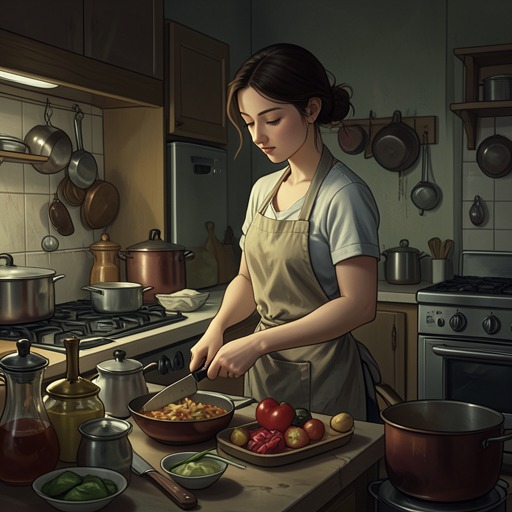
Mo’s first durable connection to Grundy is practical rather than romantic. At the Blue Glacier Saloon, Buzz DuChamp injures himself while demonstrating a bottle-cutting technique and suddenly cannot continue running the kitchen. Mo volunteers because she worked her way through school at the Tast-E-Grill Drive-In and recognizes the short-order demands of the menu. The kitchen already has shaped hamburger patties, chopped vegetables, and orders close to burning on the grill, so her intervention is immediate, concrete, and useful rather than aspirational. She takes control because the situation requires someone who can work.
Her competence changes how Evie DuChamp sees her. Evie explains that Pete can crack eggs and chop vegetables but becomes flustered during a rush, while Buzz’s manner of directing him has made Pete leave the kitchen crying. She offers Mo a full-time position while Buzz is away and suggests that Mo take over the baking. Mo initially objects that Evie has known her only since that morning, but Evie identifies the qualities that matter in a small business: Mo does not faint at blood, helps a near stranger, cooks consistently, and leaves the tip jar untouched despite having opportunities to steal. The offer is therefore an ethical and labor assessment as much as an invitation.
Mo accepts because the work gives her a form of belonging without forcing her into the center of attention. She likes being in the kitchen, part of the room but not exposed within it; she likes the saloon’s voices and chatter and likes being near Evie. The job becomes a “baby step” into the community, contradicting her plan to remain purposeless. Her labor also produces institutional change. Working with Evie, she helps revamp the menu while Buzz is absent, replacing the limitations imposed by the person who normally controls the cooking. The proposed cover story—that Pete dropped the menus in the sink—captures the saloon’s comic informality, but the underlying result is serious: Mo’s skill gives her influence over what the business serves and how it presents itself.
That influence eventually becomes ownership. After Mo increases the saloon’s receipts by at least twenty percent, Evie and Buzz offer her a twenty-percent share in the Blue Glacier Saloon. They also prepare a small nursery in the office so she can continue working after maternity leave. The arrangement completes a progression from emergency substitute to valued worker to partner in the enterprise. The saloon is not merely where Mo earns money; it is the workplace through which an outsider acquires economic power, social recognition, and a durable place in Grundy.
Secrets, Danger, and Moral Agency
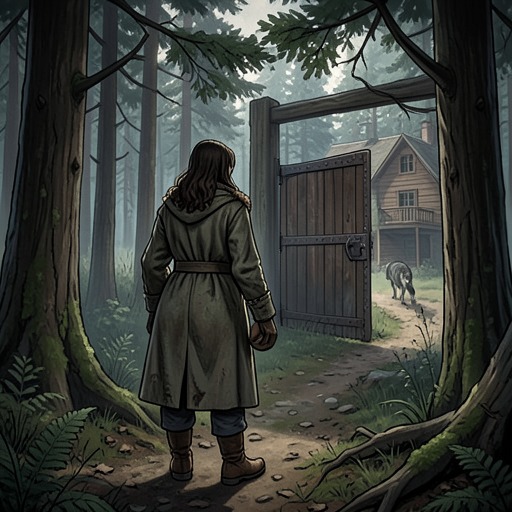
Mo’s integration into Grundy exposes her to the town’s boundaries as well as its welcome. Local suspicion toward outsiders is strong enough that residents may remain outsiders even after twenty years, and Susan Quinn’s winter probation custom means Mo must collect her own mail until she proves she can survive her first winter. Cooper Graham’s hostility is more personal and territorial: he distrusts newcomers who arrive seeking a romanticized communion with nature. Mo’s position is consequently unstable. She is welcomed by some residents while being tested by the community’s customs and resisted by a man who will become central to her life.
Her relationship to truth changes when she learns that Cooper is a werewolf. Evie explains that her own family branch is a “dead line,” unable to transform, while Cooper was among the first of his generation to phase and was expected to become that generation’s alpha because of his speed and strength. He nevertheless left the Crescent Valley packlands and moved roughly a hundred miles away to Grundy, a separation that was devastating for him. Mo is not simply told a supernatural fact; she is given access to a concealed social system organized by bloodline, transformation, leadership, and secrecy.
The secret also revises earlier misunderstandings. When Buzz became agitated about reporting the wolf that attacked John Teague, Mo interpreted his behavior as evidence that he believed her account. Evie clarifies that Buzz thought Mo might have imagined the wolf and feared that the story would cause the small town to label her “Crazy Mo.” Mo’s certainty that she had been disbelieved is therefore confirmed, but the explanation also reveals the protective function of local silence. In Grundy, disbelief and secrecy can look alike from the outside; Mo must learn to distinguish hostility from concealment and danger from communal caution.
Mo’s moral position becomes sharper when Cooper prepares to visit his relatives. She is uneasy because Samson Graham has a frightening reputation and because wolves may be stalking her neighborhood, yet she refuses to let Cooper go alone. Cooper needs to see his grandfather and speak with Eli, warning him that people in Grundy want to hunt wolves. Mo offers to drive, despite fearing that she may be entering a den of relatives connected to the attacks. Her stated hope of finding evidence that clears the pack, even imagining a confession for Alan Dahling, is partly comic, but her action is not passive. She accepts risk in order to protect Cooper, investigate the threat, and keep the conflict from being reduced to an easy division between innocent humans and guilty wolves.
Relationships and Chosen Community
Mo’s earliest relationships are shaped by resistance to inherited authority. Her parents’ unconventional politics and rejection of ordinary institutions have influenced her even when she opposes them, and her engagement to Tim becomes an attempt to rebel into conventionality. The breakup forces her to recognize that both rebellion and conformity can leave her governed by the same people. Grundy allows her to test a third possibility: choosing relationships and obligations because they fit her own developing judgment.
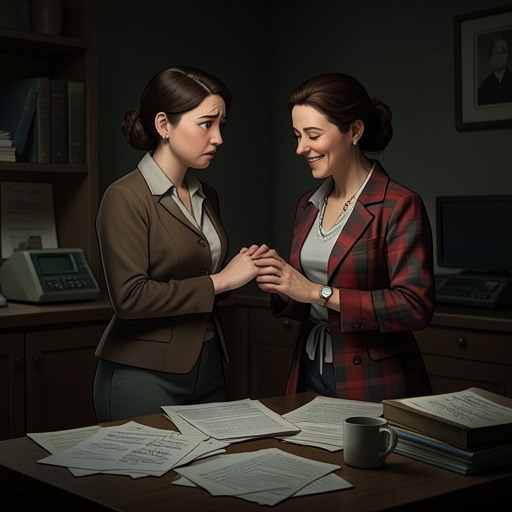
Evie is the first person in Grundy to convert Mo’s usefulness into trust. Their friendship grows through work, shared knowledge, and mutual repair. When werewolf complications create tension between them, Mo admits that she hates feeling helpless and does not want the supernatural crisis to damage their friendship. Evie agrees that werewolves will not be allowed to come between them. Their reconciliation takes place through drinks and Sandra Bullock-based confections, turning a potentially grave conflict into an ordinary act of care. The scene matters because it preserves the human texture of Mo’s life even after she enters the werewolf world: friendship is maintained not by eliminating disagreement but by refusing to let secrecy and fear control it.
Mo’s connection with Cooper begins under antagonistic conditions. He is surly, keeps others outside an unmistakable personal boundary, and reacts badly to outsiders, while Mo responds to his hostility with irritation, curiosity, and attraction. As his hidden identity emerges, she becomes the person who can cross between his isolated life in Grundy and the family and packlands he left behind. Her willingness to accompany him to the hospital and to confront the risks surrounding his relatives places her in the role of partner before their marriage formally confirms it. She does not merely accept Cooper’s secret; she acts within the dangerous network that secret creates.
Mo also becomes a bridge between the human town and the werewolf pack. Eli visits the Blue Glacier to speak with Cooper, and his imperious gesture and expectation of obedience reveal a political authority that Mo recognizes even while remaining on her feet to serve customers. By meeting Eli in the saloon, Mo’s workplace becomes a contact point between Grundy’s public community and the hidden Crescent Valley werewolf hierarchy. Her position is unusual: she is neither a passive outsider nor a pack leader, but someone whose loyalty to Cooper and practical connection to the saloon give her access to both networks.
Marriage, Pregnancy, and the Future
Mo and Cooper marry in a small civil ceremony in her front yard one month before the closing events, with Nate Gogan presiding. The marriage is deliberately traditional in outward form despite the circumstances surrounding it: Mo wears a white dress and flowers in her hair, and Kara Reynolds serves as maid of honor after traveling from Mississippi. The community jokes about a shotgun wedding because Mo is pregnant, but the jokes lose their force during the reception. The ceremony thus converts what might have been treated as scandal into a public, accepted commitment.
Pregnancy alters Mo’s position without erasing her independence. Her stomach becomes a subject of local conversation, while the nursery at the Blue Glacier makes continued work possible after maternity leave. The saloon’s patrons are imagined as a ready-made circle of people willing to cuddle or coo over the baby, extending the communal intimacy that first drew Mo into the business. Cooper’s comic anxiety about a future daughter and the traps he would set when she turned thirteen gives the impending family life a domestic shape, even within a world defined by lycanthropy and pack politics.
The marriage also coincides with political change among Cooper’s relatives. Cooper still does not want to be alpha, but after Eli’s loss he visits the packlands more often. The pack eventually chooses a more democratic method of selecting its leader, using a secret ballot rather than relying solely on inherited expectation. Maggie Graham wins by a landslide. Mo’s place beside Cooper therefore develops alongside a reorganization of the pack’s authority: Cooper’s refusal does not leave the community without leadership, and Maggie assumes the role with surprising fairness and effectiveness. Mo observes that Maggie is finally happy enough to offer her something resembling a smile, a small but meaningful sign that the old hostility has eased.
Narrative Role and Significance
Mo’s arc is a movement from oppositional identity to chosen participation. She begins by defining herself against her parents, against corporate work, against the possibility of being known, and against the vulnerability of starting over. Her inheritance allows her to avoid immediate economic necessity, but it cannot supply purpose. The Blue Glacier changes that equation by making purpose tangible: a rush of orders, a damaged kitchen, a menu that needs changing, customers who return, and a community that gradually recognizes her reliability.
Her strength is consistently practical. She cooks when Buzz cannot, accepts Evie’s employment offer, protects confidential information about her name, drives Cooper toward a dangerous family encounter, works to preserve her friendship with Evie, and helps establish a future business role while pregnant. These actions make her more than a spectator to the werewolf plot. She becomes the connective figure through whom the saloon, Grundy’s residents, Cooper’s family, and the Crescent Valley pack can encounter one another without collapsing into a single community.
Mo’s significance also rests in her capacity to hold contradictions together. She can feel relief and even savage delight at John Teague’s death while recognizing that such pleasure disturbs her moral self-image. She can distrust the werewolf threat while defending Cooper and seeking fair evidence about the pack. She can want privacy while becoming a public partner in a local business, and she can resist inherited expectations while accepting marriage, pregnancy, and communal responsibility on terms she has chosen. Her ending is not a return to the life she fled or a complete absorption into someone else’s world. It is a negotiated belonging: Mo keeps her complicated name, her work, her friendships, and her judgment while building a family and future in Grundy.